What Will We Call Work at the End of 2026?
The word "work" just doesn’t fit anymore. Tasks are splitting between humans and AI — and we don’t have words for that yet.
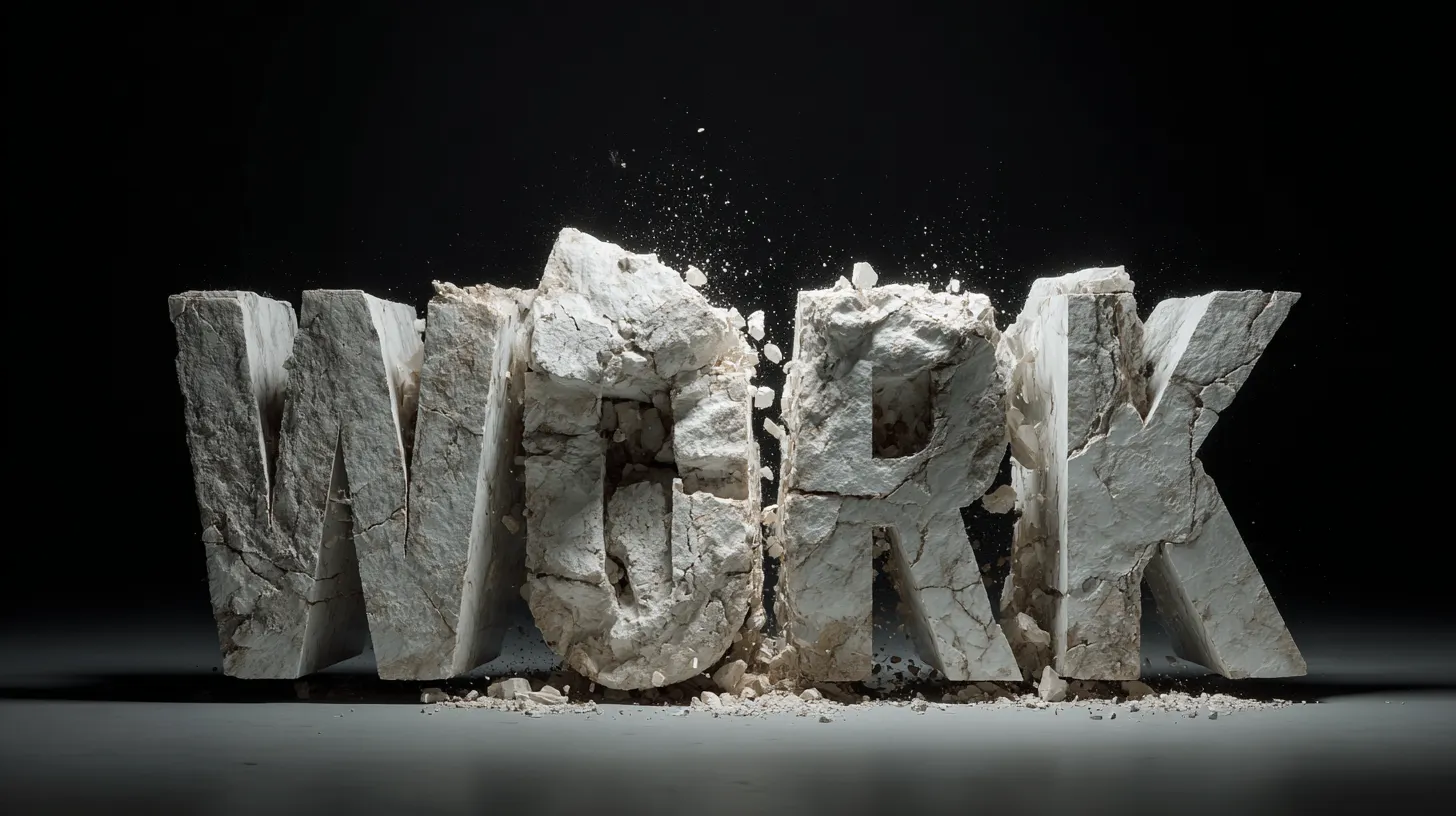
The word "work" just doesn't fit anymore. The problem isn't the word itself — it's that what it covers is breaking apart.
Your job title probably hasn't changed since last year. But what do you actually do now? Some of it is handled by AI, some by you. We don't have words for that split yet. And that's not just a vocabulary problem, it's a sign that something bigger is shifting.
I've spent a lot of time digging into the research. Not the hype, not the doom, just the facts. The reality is messier, and honestly, more interesting than either side wants to admit.
Let me walk you through what stands out.
The Data Shows Something Surprising
Stanford's Digital Economy Lab analysed millions of payroll records, marking the largest study of its kind. Employment for workers aged 22–25 in AI-exposed jobs has fallen 6% since late 2022, while employment for workers over 30 in those same roles has grown 6–13%. Such shifts at the micro-level indicate potential macroeconomic consequences.
Young software developers specifically are down 20% from their 2022 peak. According to a recent Stanford study, the number of early-career customer service workers has dropped by nearly 11% since the rise of generative AI. This decline reflects actual changes, not predictions. It's already happened.
Here's where it gets interesting: Yale's Budget Lab looked at the same period and found "a labour market characterised broadly by stability, rather than disruption."
Both perspectives hold truth. The market as a whole appears stable, while certain groups face significant challenges.
Tasks Are Splitting
Here's what this vocabulary gap looks like in real life.
Take accounting. AI now processes invoices up to 80% faster — data entry, reconciliations, expense categorisation. But audit judgment, tax strategy, client trust? Still human. The job title "accountant" now covers two totally different kinds of work happening side by side.
In other words: tasks are splitting. Jobs aren't disappearing overnight — they're breaking into parts AI can do, and parts only humans can. Sometimes the same person does both, but it's not the same kind of work.
That's why our vocabulary is falling apart. "Work" used to mean one thing. Now it covers at least two totally different things under the same job title.
Knowledge Work Is Not Safe
If you're reading this, you probably think your job is safe. Data analysis, writing, strategy — classic knowledge work that needs judgment.
But think again.
Norwegian researcher Aksel Braanen Sterri puts it bluntly: "Jobs with data analysis and writing work are most threatened. Such analysis jobs, there are quite a lot of them, so I think that's where it comes first."
Meanwhile, look at blue-collar work. UPS cut 20,000 jobs and closed 73 facilities in 2025 as part of reducing Amazon volume by half. Amazon itself is planning to automate 75% of warehouse operations by 2033, potentially displacing hundreds of thousands of workers.
The old idea that desk jobs are safer than physical work might be totally wrong.

The Centaur Advantage
Not all the news is grim. Harvard research shows that human-AI teams consistently outperform either humans or AI alone.
Centaur analysts — humans working together with AI — outperform AI-only forecasts 54.8% of the time.
Here's the thing: the real skill isn't just using AI. It's knowing when to step in and override it.
Stanford research found that senior accountants treat AI as a collaborator. They intervene when confidence drops. Junior staff accept AI-generated outputs at face value — even when flagged as uncertain. Result: juniors see smaller performance gains.
Experience teaches you when not to trust the machine. That judgment is what humans bring.
The Adoption-Value Gap
McKinsey's 2024 survey found that 65% of organisations now use generative AI regularly — nearly double the previous year.
But Boston Consulting Group surveyed 1,000 executives across 59 countries: 74% are struggling to achieve value from AI. Only 4% have capabilities that consistently generate results.
MIT research found that 95% of the $30–40 billion invested in AI pilots in 2024 delivered zero measurable return.
We're seeing adoption and failure at the same time. That's what real transitions look like.
The Sentiment Shift
How people feel about AI is shifting fast — and not the way you'd expect.
Reach3 Insights found concern about AI surged from 5% in 2023 to 22% in 2024. Optimism dropped 18%.
More striking: BCG's survey found that 49% of regular AI users believe their job may disappear in the next decade — compared to only 24% of non-users. People working with AI are more worried, not less.
What I Expect by December
The vocabulary will split. We'll start using different words for AI-supervised work, judgment work, and synthesis. Job titles will stay the same, but how we talk about what's inside them will change.
The junior squeeze will get worse. Entry-level jobs in AI-heavy fields will keep dropping. We'll finally have to talk about what happens when AI wipes out the work that used to teach people judgment.
The centaur model will show up. Companies will start to notice who knows when to override AI and who doesn't. It won't be official, but it will shape careers.
Blue-collar work will get a boost. As entry-level office jobs dry up, trades and skilled manual work will gain both status and pay. The old idea that desk jobs are always better will start to fade.
If You're Leading People
Stop pretending this is a smooth ride. 74% of companies are struggling. Admitting it's hard builds more trust than empty optimism.
Invest in judgment, not just tech. Buy the AI tools, sure. But spend twice as much time teaching people when not to trust them. That's the skill that matters.
Fix the junior pipeline. If AI takes over entry-level work, how do people learn judgment? Build alternatives: apprenticeships, rotations, and real mentorship.
If You're an Individual
Familiarity beats fear. If you aren't using AI tools yet, start now. Knowing what they can and can't do is better than worrying about what-ifs.
Task-based work is at risk. Judgment-based work lasts longer. If your job is pattern or rule-based, it's automatable. Context, persuasion, and handling ambiguity are harder to replace.
Your employer's AI skills matter. Whether you thrive or struggle might depend less on your own skills and more on whether your leaders actually know what they're doing with AI.
The Honest Ending
Someone asked me what we'll call "work" by the end of 2026.
I don't have a clear answer. But I do know the word is buckling under the weight of what it's supposed to cover. Tasks are being split. Jobs are breaking up. The vocabulary is lagging behind.
I'll check back in December. By then, we'll see if the junior squeeze got worse or levelled out. If the centaur model went mainstream or stayed niche. If we found new words or just kept using the old, broken ones.
Some of you will be freer in 12 months, doing more strategic work and handing off the boring stuff. Some will feel more anxious about AI moving in on your turf. Most will feel a bit of both.
If you're still not paying attention, you're missing the point. The transformation isn't coming; it's already here. The only question is whether you'll shape it, or let it shape you.